
HOW MUCH DOES SKYDIVING COST?
(And how to get the best value for your money)
The average cost of a tandem skydive in the United States falls between $250 and $300. That's the ballpark. But not all skydives are created equal, and the price you pay doesn't always reflect the experience you get.
At Skydive Midwest, tandem skydiving costs $229 on weekdays and $259 on weekends with a reservation. Walk-ins pay $299. Every jump goes to the full 14,500 feet, every jumper gets the same equipment, and nobody gets hit with surprise fees at check-in.
What looks like a deal on paper doesn't always work out that way at the counter. Here's what to watch for.
What You're Actually Paying For
When you book a tandem skydive, you're not just paying for the jump itself. Here's what's included in the price at a reputable drop zone:
- Ground training — A 20-30 minute briefing on body position, equipment, and what to expect. This isn't optional. It's required for safety and it's built into the cost.
- All equipment — Tandem harness, container system, main parachute, reserve parachute, automatic activation device (AAD), goggles. You don't need to bring anything. At Skydive Midwest, there are no gear rental fees, no goggle purchases, no jumpsuit charges. It's all included.
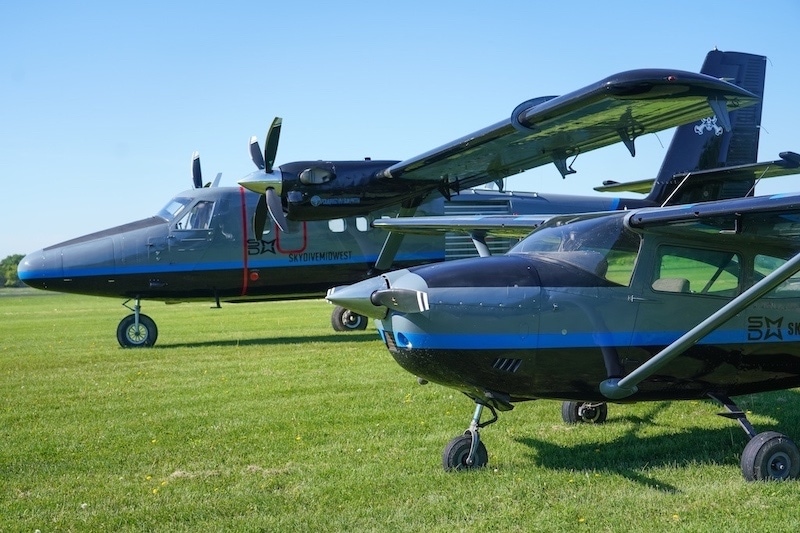
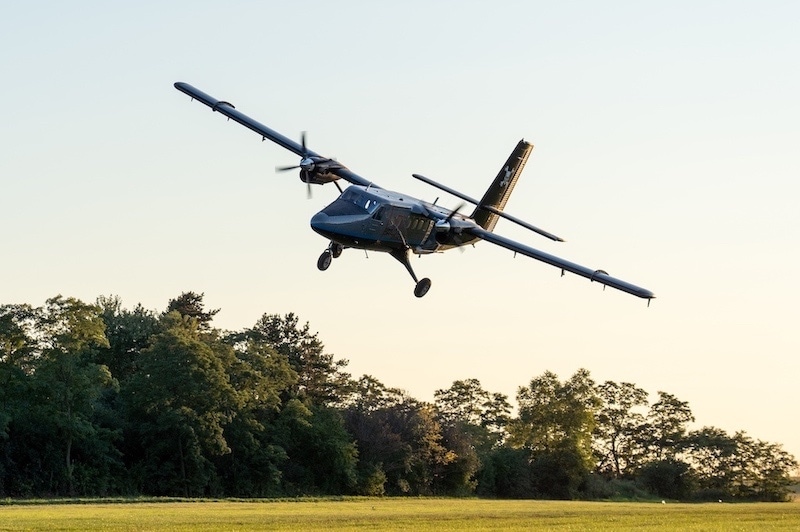
- The aircraft — You're riding in a jump plane to altitude. At Skydive Midwest, that's a multi-engine aircraft carrying up to 23 jumpers per load to 14,500 feet. The ride up takes about 15 minutes and the views of Lake Michigan start before you leave the plane.
- A certified instructor — Tandem instructors are typically the most experienced people at the drop zone. The minimum to even qualify for a tandem rating is 3 years in the sport and 500 jumps — but most have thousands of jumps and 10+ years of experience. These are people who've invested everything into skydiving and want to share it with you. That expertise is strapped to your back for the entire skydive.
So when you add it all up — fuel, aircraft maintenance, instructor pay, equipment wear, insurance, FAA compliance — the cost of skydiving at $250-$300 is actually pretty reasonable.
Why Skydiving Prices Vary
You'll see tandem skydive prices range anywhere from $150 to $350 depending on where you look. Here's why the number moves around.
Aircraft and Altitude
In fact, this is the biggest factor most people miss. A drop zone running a Cessna 182 — a small, single-engine plane that holds four people and tops out around 10,000 feet — has very different operating costs than a drop zone flying a Twin Otter to 14,500 feet with 23 jumpers per load.
Lower altitude means less freefall time. At 10,000 feet, you get maybe 30 seconds of freefall. At 14,500 feet, you get a full 60 seconds. Double the freefall for maybe $30-$50 more. That math is easy.
So when a drop zone advertises a skydive for $189 or $199, check what altitude they're actually jumping from. That "deal" might be a 10,000-foot jump on a small plane. If they offer altitude upgrades for an additional fee, you know the base price isn't getting you the full experience.
Dropzone Size and Overhead
Bigger operations with bigger planes cost more to run — but they can also spread that cost across more jumpers per load. A 23-person plane is more efficient per seat than a 4-person Cessna. The extra overhead goes to staffing, facilities, and maintenance on larger aircraft.
Location
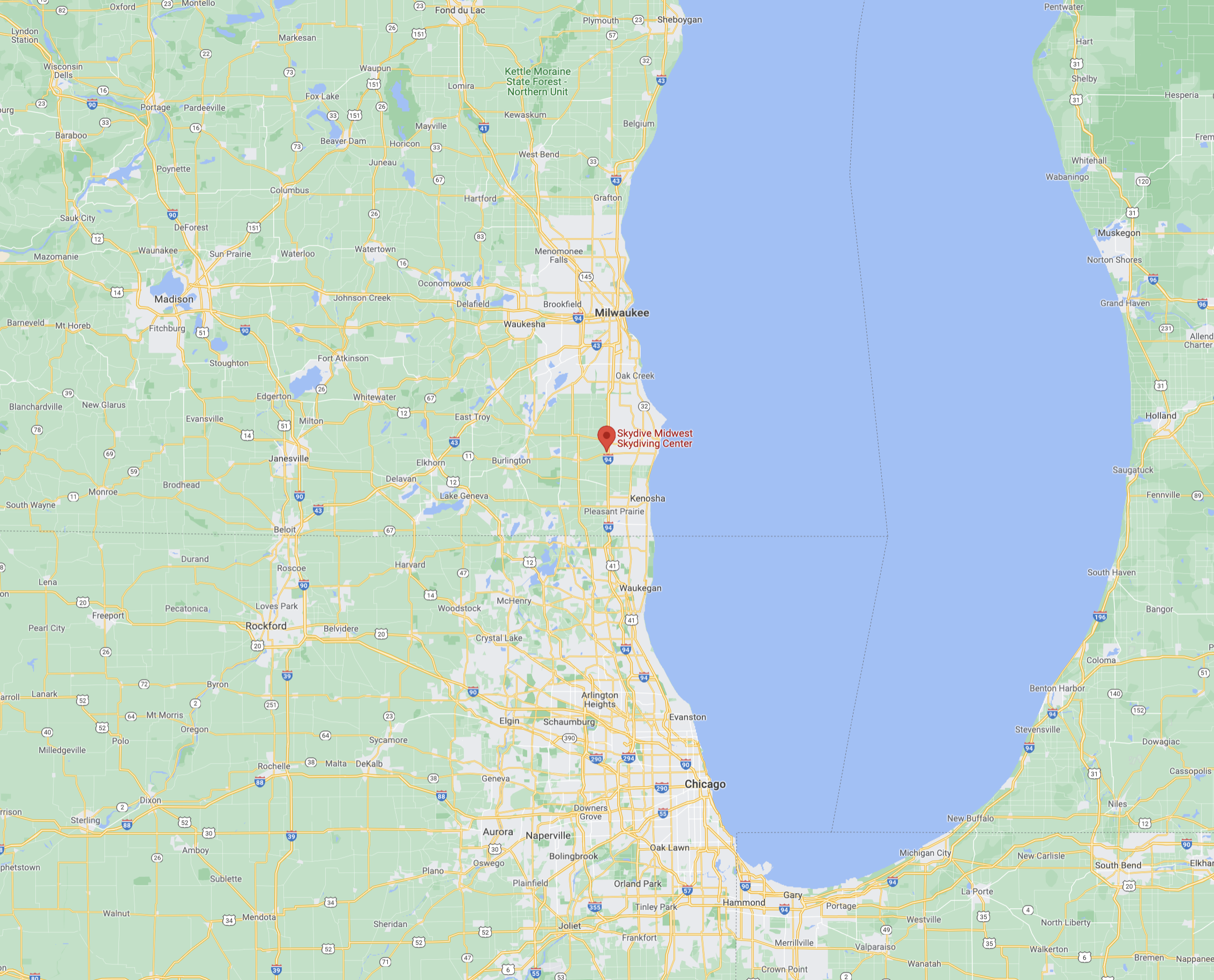
Most skydiving centers aren't in major cities. Airspace restrictions and real estate costs keep them in rural areas. But location still affects pricing — a drop zone near a major metro like Chicago or Milwaukee has higher demand and can charge accordingly. The tradeoff? You're usually closer to the good stuff. Skydive Midwest sits right off I-94 between Milwaukee and Chicago, and you're jumping over Lake Michigan. Some drop zones put you over cornfields. Same price, very different photos.
Season
Drop zones in the Midwest operate April through October. During peak summer weekends, demand is high and pricing reflects that. Weekdays are less crowded and less expensive — that's why our weekday rate is $229 vs $259 on weekends.
Hidden Skydiving Costs to Watch For
This is where skydiving pricing gets shady at some places. The advertised price pulls you in, and then the real number shows up at the counter.
Third-Party Booking Sites
Groupon is one of the more reputable ones, but even Groupon deals come with strings. Fine print often includes restrictions on booking times, advance reservation requirements (sometimes two weeks out), blackout dates, expiration dates, and limited refund policies.
Insider tip: Call the skydiving center directly and ask if they'll match the third-party rate. Many will — and you'll avoid all the restrictions.
Altitude Upgrades
Some drop zones advertise a base price for a lower altitude and then charge more for a "premium" altitude experience. This is the skydiving equivalent of paying extra for legroom on a budget airline. At Skydive Midwest, every tandem jump goes to 14,500 feet. There's no upgrade because the standard altitude IS the full altitude.
The Nickel-and-Dime Add-Ons
Also watch for hidden costs like goggle purchases, locker rentals, jumpsuit charges, or "facility fees." This is the Spirit Airlines model applied to skydiving — advertise a low base price and then make it up on add-ons that should have been included from the start. At Skydive Midwest, all equipment is included. Full stop.
Weight Surcharges
This one deserves its own callout. A lot of drop zones set their weight "limit" at something like 200 lbs and then charge tiered surcharges above that:
- 200-220 lbs: $25 surcharge
- 221-240 lbs: $35 surcharge
- 241-250 lbs: $45 surcharge
They call it wear and tear on equipment. We call it what it is — a money grab. Charging someone an extra $45 doesn't make the skydive any safer. Either a skydive can be conducted safely within the equipment's specifications or it can't. A fee doesn't change the physics.
Skydive Midwest's weight limit is 250 lbs with zero surcharge. Whether you weigh 120 lbs or 249 lbs, you pay the same price, jump from the same altitude, and use the same equipment. That's how it should work.
What About Video and Photo Packages?
Of course, video and photo packages are separate from the tandem jump price at every drop zone. Here's what Skydive Midwest offers:
| Package | Price | What You Get |
|---|---|---|
| Hand Cam | $99 | Close-up video captured on your instructor's wrist-mounted camera. You'll see your own face in freefall. Delivered same day. |
| Premium | $136.50 | Professional photos and video from a dedicated aerial photographer who jumps with you. 360-degree coverage from outside the tandem pair. Delivered same day. |
| Extreme | $189 | Both packages combined — hand cam footage from your instructor PLUS an outside photographer. The most comprehensive documentation of your skydive. Delivered same day. |
Is it worth it? Honestly, yes — if you can swing it. You're probably only doing this once (or at least, that's what you think before you land). Your friends on the ground can take photos, but they'll be shooting a dot in the sky. The aerial footage is the stuff that actually captures the experience — the door opening, the freefall, the parachute ride with Lake Michigan behind you.
The Hand Cam at $99 is the best value if you're on a budget. The Extreme at $189 is worth it if you want the full story from every angle. The Premium at $136.50 is the sweet spot if you want great footage without maxing out.
None of these are required. But most people who skip it wish they hadn't.
Skydive Midwest Pricing
Here's exactly what a tandem skydive costs at Skydive Midwest. No asterisks, no fine print.
Tandem Skydive Rates
| Price | |
|---|---|
| Weekday (Mon-Fri) | $229 |
| Weekend (Sat-Sun) | $259 |
| Walk-in (any day) | $299 |
All prices reflect a 3% cash discount. A $20 deposit is required with reservations.
Group Rates
Jumping with friends? It gets cheaper.
| Group Size | Per Person | Organizer Price |
|---|---|---|
| 3-5 people | $229 | — |
| 6-10 people | $219 | $199 |
| 11+ people | $209 | $189 |
The organizer discount is real — pull together 6 or more people and you could jump for as low as $189. That's a $70 savings off the walk-in rate. Group discounts require a $20 deposit per person and are applied when you arrive.
What's Included at Every Price Point
This is the same whether you pay $189 as a group organizer or $299 as a walk-in:
- Full 14,500-foot altitude (multi-engine aircraft)
- All equipment — harness, parachute, reserve, AAD, goggles
- Ground training and safety briefing
- USPA-certified tandem instructor
- 60 seconds of freefall
- Parachute ride with Lake Michigan views
- No weight surcharges (250 lb limit, same price for everyone)
- No gear rental fees
- No hidden add-ons
The only additional cost is video/photo packages if you choose them. Everything else is in the price.
How to Get the Best Deal on Skydiving
You don't need a Groupon to bring down the cost of skydiving. Here are the actual ways to pay less:
Jump on a weekday. The weekday rate is $229 vs $259 on weekends. Same plane, same altitude, same experience — just fewer people. Weekdays are also less crowded, so you may get off the ground faster.
Bring a group. Three or more people gets you the group rate. At 6+, the organizer jumps for $199. At 11+, the organizer jumps for $189. Rally your friends, your coworkers, or your bachelor party and everyone saves.
Check the deals page. We run prepaid specials, package bundles, and seasonal promotions throughout the year. For example, prepaid tandem specials start at $249 — that's $50 off the walk-in rate.
Follow us on social media. Flash sales and promo codes show up on Facebook and Instagram first. If we're running a deal, that's where you'll see it.
Book around the holidays. Black Friday, Cyber Monday, and holiday season are when the best deals drop. Gift certificates go on sale, and they don't expire — so you can jump whenever you want the following season.
Consider the free organizer perk. This is the underrated move. If you can get 6 people together, you jump for $199. Get 11 people together and you're at $189. Some organizers have jumped for essentially free by coordinating large groups and having the group cover their jump as a thank-you. It's not a guarantee, but it happens.
Get licensed. After the initial training investment, licensed skydivers jump for about $25. If you're already thinking about going back before you've even landed, that's the long game.
Is the Cost of Skydiving Worth It?
Here's the honest answer: it depends on what you value.
Skydiving costs roughly the same as a nice dinner for two, a concert ticket, or a round of golf at a decent course. The difference is that none of those involve jumping out of a plane at 14,500 feet and falling through the sky at 120 mph for a full minute.
Sixty seconds of freefall doesn't sound like much on paper. But in the air, it's the longest minute of your life — in the best possible way. Then you're floating under a parachute for 5-7 minutes with panoramic views of Lake Michigan and the Chicago and Milwaukee skylines. Most people land and immediately start talking about when they're coming back.
Is it a lot of money? Sure. But you're not paying for a product. You're paying for an experience people describe as the most thrilling thing they've ever done. You walk away with a memory — and probably a video of yourself screaming with the biggest grin you've ever had.
And if you catch the bug? Getting your skydiving license brings the per-jump cost down dramatically. After completing the training program and investing in your own gear, licensed skydivers at Skydive Midwest jump for about $25 per jump. Not a bad long-term deal for a hobby that involves jumping out of airplanes.
Why Skydiving Costs What It Does
If $250+ sounds expensive for 60 seconds of freefall, here's what's actually behind that number.
Aviation and Aircraft
Jump planes cost upwards of $3 million. In fact, they're expensive to fuel, expensive to maintain, and require specialized aircraft mechanics certified by the FAA. A busy drop zone makes 20-30 flights per day, and every takeoff and landing cycle beats on the landing gear, flaps, and engines. FAA-approved replacement parts cost up to 10 times what normal automobile parts cost. When safety is non-negotiable, you don't cut corners on the machine that gets people to altitude.
Equipment
Every tandem rig includes a main parachute, reserve parachute, container system, harness, and automatic activation device (AAD). These are life-saving systems designed and built to exacting standards. The research, development, testing, and manufacturing behind this equipment is extensive — and it gets inspected and maintained on a rigorous schedule. This isn't recreational gear you grab off a shelf. It's engineered to keep people alive.
Instructor Certification
Your tandem instructor didn't just wake up one day and start taking people skydiving. The minimum requirements through the United States Parachute Association (USPA) are 3 years in the sport and at least 500 jumps before you can even start the tandem rating course. Most tandem instructors far exceed that — thousands of jumps, over a decade of experience, and upwards of $16,000 invested in training and ratings. The course itself costs another $2,000. When they're strapped to your back at 14,500 feet, that's the most experienced person at the drop zone keeping you safe.
Insurance and Overhead
Aircraft insurance, liability coverage, facility costs, pilot salaries, ground crew, packing staff, customer service — it all adds up. Overall, running a skydiving operation that does it right isn't cheap. That's reflected in the price, and honestly, you want it to be. The places that cut these corners to advertise a lower price are cutting them somewhere you'd rather they didn't.
Though there are lots of skydiving deals out there that may advertise a cheaper skydive, just remember to read the fine print and know exactly what you'll be getting for that price. You tend to get what you pay for.
The national average for a tandem skydive is $250-$300. At Skydive Midwest, tandem skydives are $229 on weekdays and $259 on weekends with a reservation. Walk-ins are $299. This includes all equipment, ground training, your instructor, and a jump from 14,500 feet — no hidden fees.